Why gajar ka halwa needs different carrots is a question many home cooks never stop to ask. In Indian kitchens, carrots are often treated as a one-size-fits-all vegetable—picked casually from local markets or online grocery apps and used interchangeably in salads, sabzis or desserts. But culinary experts say this habit may be the reason why gajar ka halwa sometimes lacks its signature sweetness, aroma or rich texture.
Recent discussions among chefs and food writers highlight that carrot variety plays a crucial role in determining the final taste, colour and consistency of dishes. From raw carrot salads to slow-cooked desserts like gajar ka halwa, the choice of carrot can make or break the recipe.
Why Gajar Ka Halwa Needs Different Carrots Than Salads
The reason why gajar ka halwa needs different carrots lies in how carrots respond to heat, fat and long cooking hours. Gajar ka halwa requires carrots that soften gradually, release natural sugars and absorb milk, ghee and spices without turning fibrous.
Salads, on the other hand, demand carrots that are crisp, mildly sweet and refreshing—qualities that do not always translate well into slow-cooked desserts.
How Carrot Variety Changes Taste, Texture and Cooking Results
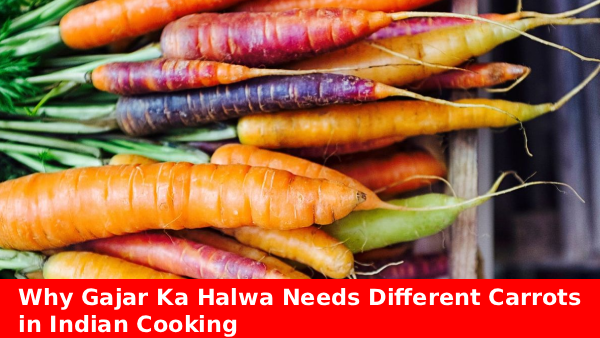
Carrots behave differently once exposed to heat. Some varieties release sweetness quickly, while others remain firm even after prolonged cooking. Colour is another important indicator. Orange, purple and white carrots signal not just visual difference but also flavour depth and nutritional profile.
Treating all carrots the same may be convenient, but it often results in dishes that feel flat or underwhelming. Knowing which carrot suits which dish allows ingredients to naturally enhance flavour without excessive sugar, spice or fat.
Which Carrots Are Best for Gajar Ka Halwa
Desi Red Carrots and Chantenay-Type Carrots
When discussing why gajar ka halwa needs different carrots, traditional red winter carrots top the list. These carrots are dense, naturally sweet and soften slowly—ideal for halwa’s long simmering process.
Chantenay-style carrots also perform well due to their thick structure and ability to hold shape while releasing sweetness over time.
Why Salad Carrots Don’t Work for Halwa
Nantes and baby carrots, commonly used in salads, are crisp and quick-cooking. When used for halwa, they soften too fast and lack the deep sweetness required, forcing cooks to add extra sugar and ghee.
Carrot Varieties and Their Best Uses
-
Nantes carrots: Best for salads and light cooking
-
Imperator carrots: Suitable for roasting and grilling
-
Chantenay carrots: Ideal for soups, stews and halwa
-
Danvers carrots: Versatile for everyday cooking
-
Purple carrots: Best for spice-forward dishes
-
White carrots: Suitable for subtle soups and purees
Understanding these differences explains why gajar ka halwa needs different carrots than everyday carrot dishes.
Are Coloured Carrots Healthier Than Orange Ones
Coloured carrots are not necessarily healthier but offer varied benefits:
-
Purple carrots: Rich in antioxidants
-
White carrots: Lower in sugar and mild in flavour
-
Orange carrots: High in beta-carotene
Including a mix enhances both nutrition and flavour balance.
Why Knowing Your Carrots Improves Everyday Cooking
Food experts say understanding ingredient behaviour is the foundation of good cooking. Knowing why gajar ka halwa needs different carrots allows home cooks to rely on natural sweetness and texture rather than compensating with excess sugar or fat.
As Indian households increasingly experiment with traditional recipes, ingredient awareness is emerging as a simple yet powerful tool for better results.