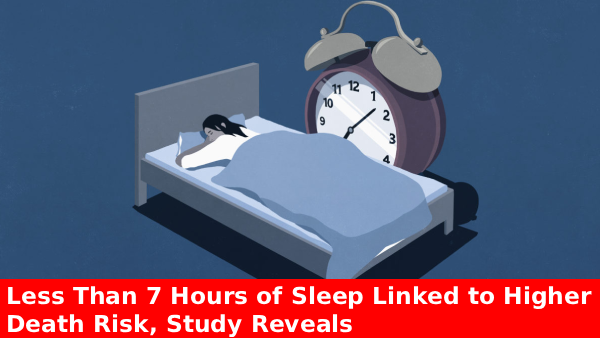
Sleep deprivation is emerging as a major public health concern, and a new study strongly reinforces that fear. Less Than 7 Hours of Sleep Linked to Higher Death Risk, Study Reveals, with researchers warning that chronic sleep loss may be even more dangerous than obesity or diabetes.
Study Shows Strong Connection Between Sleep Duration and Lifespan
A new study published in SLEEP Advances analyzed data from over 3,000 U.S. counties between 2019 and 2025. The findings highlight a clear pattern: Less Than 7 Hours of Sleep Linked to Higher Death Risk, Study Reveals, especially in areas where sleep deprivation was widely reported.
The research matched sleep duration with county-level life expectancy and found that communities where people slept less than seven hours consistently showed shorter average lifespans. This relationship was observed across wealthy and low-income areas, urban and rural populations alike.
For example, in Oregon, counties with higher sleep deprivation also had noticeably lower life expectancy, despite being geographically close to counties with better sleep patterns.
Why Seven to Nine Hours of Sleep Is Crucial
Health experts have long recommended seven to nine hours of sleep, but the study underscores just how vital that range truly is. Millions of Americans fall short of this threshold daily.
Senior author Andrew McHill, PhD, of Oregon Health & Science University, noted his surprise at the strength of the connection:
“We have always thought sleep is important, but this research really drives that point home.”
The study also found a significant correlation between poor sleep habits and higher alcohol consumption, adding another layer of risk.
Sleep Shortage More Dangerous Than Obesity and Diabetes
One of the most striking findings was how sleep insufficiency compared with other major mortality risks. When ranked alongside smoking, obesity, diabetes, physical inactivity and unemployment, Less Than 7 Hours of Sleep Linked to Higher Death Risk, Study Reveals that chronic sleep deprivation ranked second only to smoking as a predictor of early death.
This suggests that proper sleep is not simply part of a healthy routine—it may be one of the most critical factors for long-term health and longevity.
Conclusion: Proper Sleep Is a Lifespan Essential
The message from researchers is clear: getting seven to nine hours of quality sleep is not optional for a healthy life. It is essential for physical health, mental wellbeing and long-term survival.
As Less Than 7 Hours of Sleep Linked to Higher Death Risk, Study Reveals, prioritizing sleep could be one of the simplest yet most powerful ways to protect your health.